
The Telluride Ski Patrol Wars
Hauling explosives up the slopes of a box canyon on skis isn’t for everyone.
TelSki villain Chuck Horning is a patsy for the big developers who are raking in the big bucks
Empty luxury homes replace mining in the local resource-extraction economy
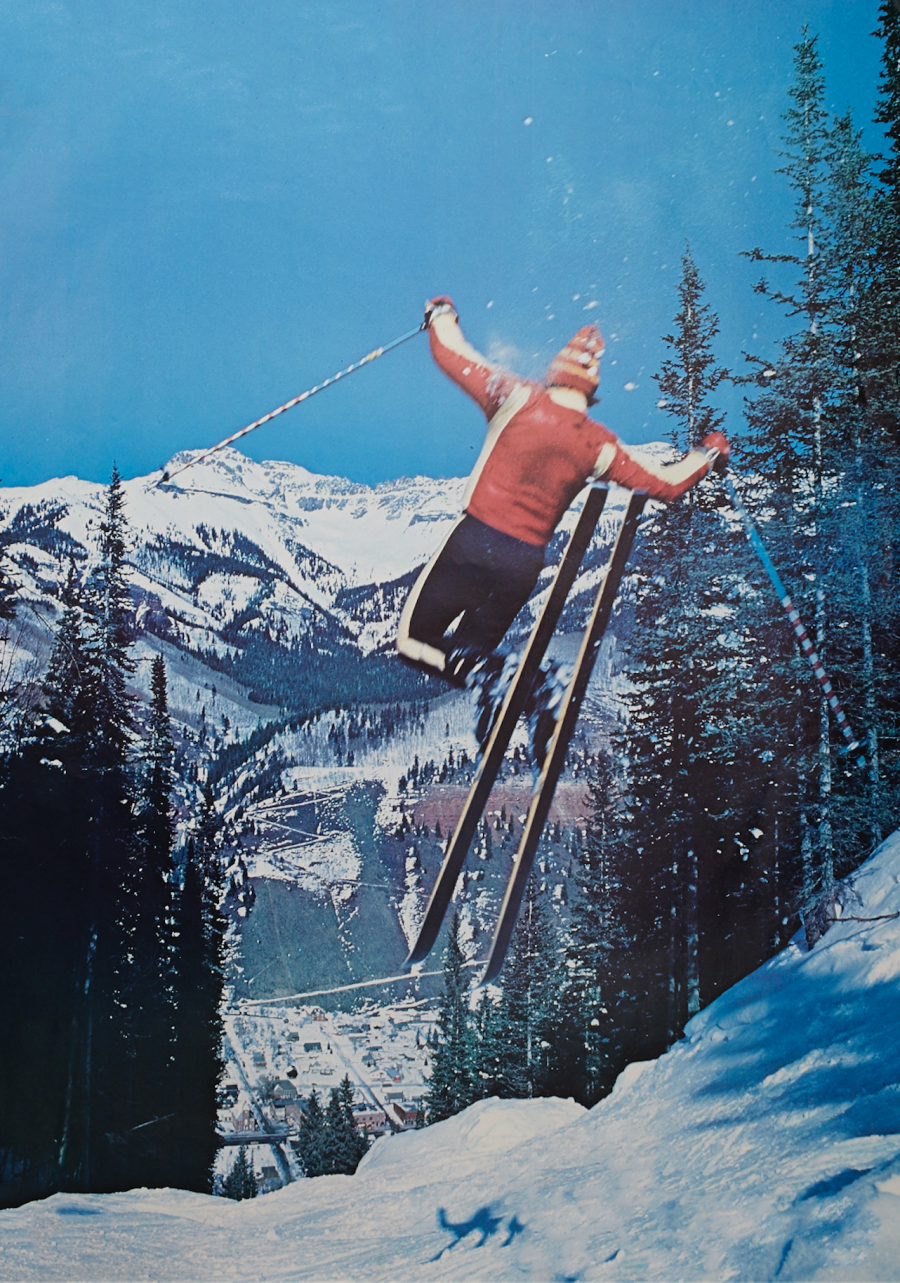
Telluride’s first skiers strapped planks to their work boots on payday to descend from the mines to the brothels on Pacific Avenue. Before it was a ski town, the town beneath Palmyra Peak was a mining town — and a besieged one at that. Posters, hung across the state by the Western Federation of Miners in Telluride in the last days of 1903, asked, “Is Colorado In America?” It showed a modified American flag, the tenth stripe bearing the slogan: “Corporations corrupt and control administration in Colorado.” Charles Moyer, president of the WFM, whose signature appeared on the poster alongside Big Bill Haywood’s, was jailed for desecrating the flag. At least a dozen striking miners and union members were arrested on charges ranging from vagrancy to conspiracy to commit a misdemeanor, many held in bullpens and makeshift jails against the orders of a judge. The union miners, out of options, fled town, and the Tomboy Mine reopened with scab labor early in the new year.
By 1905, fourteen years after the completion of the railroad line to Telluride, the town’s population had swelled to more than 5,000. It would soon shrink back down to several hundred, where it would remain until the now-famous ski resort opened nearly seventy years later. The strike had begun in an effort to reduce the workday from 12 hours to 8, a number that would be taken for granted across the country by the late 1930s. By that time the WFM had ceased to exist, and Telluride itself was crumbling into the red dirt of the San Juan Mountains.
More than fifty years ago, when Telluride’s longest-serving ski patroller Tom “Socko” Sokolowski first moved to town, the main residential drag stayed dark through the bitter winter. The town’s population was just beginning to recover from the mineral industry bust that followed the miners’ strike. In those years, the residents of the houses, many of them self-proclaimed ski bums, could not afford heat and electricity through the season. Instead, they gathered at the bar in the Sheridan Hotel, drinking cheap beer around the potbelly stove.
Today, walking Telluride’s West Colorado Avenue, most houses are dark because their owners visit just once or twice each year, holding the property as a vacation getaway or real-estate investment. The Tomboy Mine site, once the center of a town nearly a thousand strong, is abandoned, as are the hundreds of miles of shafts and tunnels in the surrounding mountains. Telluride’s new gold rush demands fewer shovels and picks, but this winter its labor disputes spilled no less visibly into the streets.
When Meehan Fee and Martinique Prohaska boarded a plane in Colorado bound for Southern California, on one of the last days of 2025, whispers flew. What were the Mayor Pro Tempore of Telluride and the Mayor of Telluride’s suburb (to the extent that a town of 2,000 can have suburbs) Mountain Village doing in Newport Beach — which is known to the people who live and work under the peaks of the San Juan Mountains not for its luxurious boardwalk, but as the lair of Chuck Horning, the reclusive and occasionally vindictive owner of Telluride Ski and Golf (locally known as “TelSki”). His meeting with Fee and Prohaska, arranged by a prominent Telluride businessman, is marked in the town’s recent memory as the day the ski patrol went on strike, bringing lifts and local commerce to a halt.
Negotiations between the patrol union and the ski resort, which take place every three years, began last summer. Graham Hoffman, president of the Telluride Professional Ski Patrollers Association (CWA Local 7781), described the resort’s longtime negotiator as obstinate, and negotiations as contentious: The resort’s team submitted the same offer, which did not meet any of the union’s requirements, several times in a row over several weeks. “Competent leadership at the top,” Hoffman said of the resort itself, “would never have let it get this far.”
The indictment is common around town. Horning, locals say, can be erratic and emotional. He fired his own son, whom he’d appointed to run the resort on the ground. He was willing to eat the cost of the shutdown, union members and community leaders said, which probably crept into the tens of millions of dollars per day, rather than meet the patrol’s demands for a tenure-based wage structure and cost-of-living raise that would have cost the resort less than $100,000 over the next three years. In past negotiations, the resort and the union rehashed the contract in year two of three, leaving an extra year to tie up loose ends should negotiation come to a standstill. Hoffman referred to this practice, which ended several years ago, as the last period of good faith from the resort. Horning fired the resort’s CEO and architect of the year-two policy, Bill Jensen, in 2020 — allegedly days before the majority of his stock options were set to vest.
Even without a strike, the town would have had an economically thin winter, thanks to snow conditions across the American West. As early as September, with patrol negotiations still ongoing, hospitality workers said reservations for the peak season were already down. Vacation rentals, a nine-figure industry in a county where tourism supports 70 percent of all jobs, stayed down through December, as the resort opened a few runs at a time on man-made snow. The snow that should have fallen by the time the union went on strike had been as absent from Southwestern Colorado as TelSki’s owner from his teetering resort.

Andrew Eagleton, a weeknight bartender at O’Bannons Irish Pub, is having a slow year. Not so much at the bar as in his second gig, chauffeuring vacationers from the airstairs of private jets at the local airport to their second homes and back again. It’s hard to say if the lack of snow, the patrol strike, or something yet unknown kept Telluride’s richest visitors away this winter, but away they kept. “Since the beginning,” he said over the bartop, “it hasn’t been about the ski resort. It’s been about real estate… Everyone’s trying to get their sticky fingers in there.” For a few decades, Andrew and his parents ran a breakfast spot in town that locals remember fondly as a product of a different time. That’s a theme around town. So is the word greed.
During the stalled negotiations, a representative of the patrol union spoke with a group of concerned real-estate interests in a closed-door session. The representative, who asked not to be named, described feeling as though she would be skinned alive. She suggested that for the town’s owning class, the strike may have been the first time they felt discomfort of any kind. Patrollers, the member explained, work from before dawn until after dark, in biting cold; many live in unconventional housing and move around from season to season, beholden to unpredictable snow years, and are well used to discomfort.
During his first decade and more in town, Socko lived in a coal shed behind a large Victorian house. He remodeled the 16-by-20 foot shed himself, harvesting beams from a porch that fell from the Sheridan Hotel. In storm winds, the plastic flaps over empty window frames shook, and snowflakes drifted inside. He grew up in Michigan, but moved to Telluride from Aspen, where he had worked a season in a restaurant at the ski resort, because he heard there was to be a new ski hill. He spent Telluride Ski Resort’s first winter working in mountain operations, not yet a skilled enough skier to join the patrol; on stronger legs the next winter, he made the cut.
Socko and I talked for a while outside a café in town, midwinter sun making the concrete pale, and almost every passing local waved or stopped by to say hi. One such friend, by way of comment on the situation at hand, offered simply, “We actually used to be a tourist town at one time. What we are today is a real-estate town.”
“It’s impossible to be a ski bum anymore,” Socko said. “Impossible. I borrowed thirty bucks to move to Telluride. Back then, you could rent a whole house for a hundred seventy-five bucks a month, and split it with two or three other people.” But Socko knows how things move forward, and why. He grew up in Detroit’s golden age of unions, when two cars in a suburban garage meant success to blue-collar masses, and the stability of manufacturing employment was held tight by organized labor. Now, a union member himself, he lives 30 minutes down the road from Telluride, in a paid-off house, knowing that his younger coworkers will never afford the same. “I watch them all come and go. The first three years here, you’re a deer in the headlight, then you start to get comfortable, and after five, you finally know.”
What they know is that Telluride is no longer for people like them. In 2010, MIT and the Harvard School of Design co-produced a report commissioned by the nonprofit Telluride Foundation titled “Alternative Futures for the Telluride Region.” The authors noted that an era was “rapidly coming to an end… The economic performance of the area, if measured by job creation and output, has been strong. These jobs have been driven primarily by tourism and construction… An associated trend has been the steep rise in land prices. This has been good for landowners but generally bad for employees.”
In the sixteen intervening years, the region’s expansion has blown the report’s projections out of the water. The high-growth model showed an increase from 500,000 visitor-days per year in 2010 to an estimated 800,000 by 2022. Actual 2022 numbers topped 1.5 million. Housing stock, meanwhile, barely made the low-growth projections.
On the eighth day of January, and the thirteenth day of the strike, the negotiators representing the Telluride Professional Ski Patrollers Association walked out of the room where, finally, a new bargaining representative for TelSki had begun to use words like “we understand your position.” The old negotiator had been fired the week prior. They had a deal. The resort had returned, Hoffman said, with a markedly different tone than that of the last four years. More money on the table, and a concession that line supervisors could be included in the union, brought the union membership far enough into the black to vote unanimously to end the strike. But the contract still lacked an experience-based wage structure, demand for which had played no small part in the strike’s inception. After trying and failing to recruit scabs to open parts of the resort, TelSki recognized that the patrollers were both resolute and invaluable; a powerful position from which to negotiate.
Snowfall is a risky thing on which to build a business. It’s fickle and occasionally dangerous. Since the early 1970s, when the US ski-resort development boom began to slow, annual snowfall has, on average, fallen significantly. Since Telluride opened in 1972, resorts across the country have been early and extreme indicators of climate change. A few degrees, or the moisture content of a few storm cycles, can mean the difference between profit and loss.
Over the hill from Telluride, traveling on the free gondola that connects the two towns, I reached Mountain Village. The middle station — San Sophia, 10,540 feet above sea level — opens to the ski resort on one side and a restaurant on the other. The Mountain Village side feels like a Telluride-themed amusement park. (Telluride, in turn, feels like a mining-themed ski park.) The strike was over, but the snow had still not come. The higher lifts were running, mostly empty, and the sun beat hard on the few goggled patrons who hadn’t cancelled their trips in spite of the strike or the bare ground.
Prior to corporate consolidation in the 1990s and early 2000s, when Vail Resorts and Alterra Mountain Company began snapping up family- or investor-owned properties and distributing risk across enormous regions, the burden of a bad snow year fell on the resorts and their towns. Telluride’s Horning is, according to several locals, a small fish in a big real-estate pond, and he holds the ski resort and golf course as a status symbol as much as an investment. His stubbornness has precluded standard management practices, like hiring a general manager or any upper-level managers, despite his reported medical inability to travel to Telluride’s high altitude. Clark, the TelSki spokesperson, responded to written questions only far enough to say that the resort “is not for sale, nor has it been.”
Neither Prohaska, herself a member of the patrol and the union, nor Fee, who was elected Mayor Pro Tempore last fall after losing the mayoral race by ten votes, are real-estate agents. This would hardly be notable anywhere but Telluride, where property-management companies outnumber local restaurants, where real-estate agents outnumber high-school students, and where annual home-sale volume recently surpassed $1 billion (or $500,000 per year-round resident, about 100 times the national average).
Prohaska and Fee, it turns out, went to Newport Beach to attempt to buy TelSki from Horning, who has refused several offers in the hundreds of millions and once said to a longtime Telluride local, “Why would I sell when the price goes up every year?” The offer — made at $127.5 million on behalf of the newly minted Telluride Ski Resort Fund and backed by anonymous investors — would have seen Horning retain an honorary seat but cede control to a board, with the Fund gaining a controlling interest. In return, along with the payout, the mayors signed their end of a contract (later leaked, allegedly by a member of Horning’s team) that committed them to smoothing things over with the patrol, ending the strike, and repairing tax and water pricing relations — critical to the resort’s snowmaking operations — that had been damaged over the last few years. It was this last part, only possible in their roles as elected officials but promised in their capacities as private citizens, that lit up Colorado publications and Facebook gossip pages. Prohaska and Fee both resigned shortly after their respective town councils opened third-party investigations into the matter.
In a closed-door council session, which would later be leaked on YouTube by an anonymous user called Ketchup King, a councilmember said, “As soon as anybody on [Chuck’s] team starts getting along with people, he fires them… Come up with a reasonable solution, then you’re axed.” In the same leaked session, imagining himself protected by attorney-client privilege but forgetting the omniscient internet, Mountain Village town manager Paul Wisor admitted to helping broker the investor backing for the Telluride Ski Resort Fund and helping to draw up the damning contract. In a January Telluride town council meeting, a concerned citizen wondered aloud, in public comment, whether Wisor and Fee’s romantic relationship would be a subject of the subsequent investigation. The council did not provide a clear answer.
On March 6th, TelSki filed a lawsuit against Prohaska, Fee, and Wisor, seeking “several million dollars” in damages. The resort alleged that the three town officials “harassed” Horning to sell the resort, leveraging their ties to the patrol and their capabilities as elected officials to put pressure on the deal, while violating town ethics codes. In interviews and statements prior to their resignations, Prohaska and Fee had said they felt welcomed by Chuck’s team, who seemed open to the deal up until the moment the contract was made public. To put it simply, the locals got out-played.
With the clarity of hindsight, the wave of ski-patrol unions and notable strikes in recent years can partially be explained by the same labor dynamics that led miners in Telluride to rebel against their bosses. The workdays were getting longer, the riches of the mine more bountiful, and the owning class ever richer, and yet the workers remained poor and died young. Today’s ski patrollers find themselves forced out of town, or out of the job, by stagnant wages, skyrocketing costs of living, and an almost-total lack of health insurance. The town has moved from one resource boom to the next — from mining to real estate — guided by the same allegiance to greed, and not much else.
To work in Telluride today is to live in the shadow of obscene wealth. As a ski patroller, it is also to be beholden to it; to wake before sunrise to hike the steep ridgelines, backpack laden with high explosives, charged to control avalanches; to make sure the resort that drives the region’s economy is safe; to render often lifesaving medical aid to the people who vacation in the homes that the patrollers themselves will never be able to afford. The resort transition that began in the 1970s and breathed new life into the collapsed mining town has breathed too hard. The margins of society, where mountain employees have lived for generations, are shrinking. Mountain jobs require new levels of professional expertise, operations and liability have become more complex, and housing is harder to come by than ever. Wages, meanwhile, have stagnated.
The second gold rush in Telluride was not the ski resort, valued at a few hundred million dollars, but the land around it, which is now worth hundreds of billions. The new barons are the land brokers. Horning is a convenient and villainous figurehead, drawing local ire away from the people who are making the real money in Telluride and who do even less to maintain the local ecology.
For all the hubbub around local government (one group of citizens at a town-hall meeting referred to themselves, half-jokingly, as “the pitchfork crew”), hardly more than a curt nod has been given to the origin of the problem that residents now face. In her resignation letter, Meehan Fee wrote, “the economic model under which we have been operating no longer serves the needs of most of our residents, families, businesses, and workforce.” The biographical page for Scott Pearson, Mountain Village’s new mayor, notes the following: “Ensuring that those who work here can live here is foundational. It ensures local businesses can thrive. It reduces traffic. And it makes our town more vital, improving the quality of life for all, including second homeowners.”
In Telluride, there will always be those who dig the earth and those who sell it; those who forge their lives out of love for a place and those who call ahead to have their refrigerator stocked and the heat turned on. “The actions that ought to concern you,” said one citizen in the town hall in early February, “extend far beyond the particular gathering of three people in California.”
At its root, Telluride’s problem is an American problem, magnified by the smallness of the town: The chance at a meaningful pursuit of a decent life has been stripped from the young (and young at heart) by those who got to it first and shut the door behind them. The next four years, the last accounted for in the Alternative Futures report, will see Telluride through what Andrew at O’Bannons called the “tail end of our gentrification process.” In the meantime, construction crews have broken ground on a new Four Seasons resort in Mountain Village, construction which will reportedly cost more than one billion dollars.
The Telluride Professional Ski Patrollers are still out there now, on ridges high above town, goggle-tanned and eyes glinting. In one hand, the patrollers hold a contract riddled with compromises; in the other, a three-pound high-explosive charge laced with a two-minute fuse that will rattle the box canyon that they call home. In a few years, when their contract is renegotiated again, it will likely be even harder for them to find housing and raise families on their seasonal wages. No one needs to imagine what all the fancy real estate here would be worth without them, though. That’s Chuck’s problem. Soon, it could be everyone else’s problem too.